

10 Tongits GameZone Decisions You Didn’t Know Were Hurting Your Game
Tongits games on GameZone often swing on small, easy-to-miss decisions rather than one dramatic error. Card value changes from turn to turn, opponents’ hands stay hidden, and every discard leaves information behind. Because Tongits runs on incomplete information, the focus stays on decision quality: reading the table, rebuilding plans when the hand changes, and managing risk as the round speeds up.

Below are ten common Tongits GameZone mistakes that affect consistency, plus simple ways to reduce them.
Quick Overview
Frequent problems include holding high cards too long, forcing low-probability melds, playing too fast after a strong draw, ignoring discard-pile patterns, and letting emotions after a loss shape the next hand. Cleaner play comes from repeated hand reassessment, tracking visible pickups and discards, adjusting to endgame pressure, and setting responsible limits.
1) Keeping a high card without a working plan
A King or other high-value card can feel too valuable to drop, especially when it “might” pair later. After several turns, attachment grows and discarding feels like admitting the earlier hold was wrong. In Tongits, old decisions lose relevance when the board changes. An unmatched high card becomes expensive deadwood when an opponent ends early.
Practical check: ask what the card contributes now, not what it might do in five turns.
2) Discarding as if opponents collect nothing
A discard removes a card from your hand but adds a clue to the table. When an opponent repeatedly takes cards that match a suit pattern or a run, discarding nearby ranks can complete their route. Exact hand reading stays impossible, but visible behavior—pickups and discard history—creates usable signals.
For newer players, this becomes a key shift from rule knowledge to decision-based play.
3) Overcommitting to an “almost finished” combination
The “one card away” trap shows up constantly. A run such as 6♥–7♥–8♥ looks promising, but several turns without progress can turn the chase into a drain, especially when the rest of the hand stays scattered with high deadwood.
Effort already invested does not increase the odds of the missing card appearing. Past turns function as feedback, not a contract to keep chasing.
4) Picking up every card that looks usable
Taking every interesting discard creates a hand full of half-melds: multiple pairs, partial runs, and too many “maybe” routes with no priority. The result becomes lower flexibility and higher deadwood exposure because the hand cannot commit cleanly to one or two best lines.
A more stable approach uses a hand-wide view before picking up: does the card strengthen the best plan, or just create another unfinished branch?
5) Speeding up after a good draw
A strong draw can trigger instant confidence, and digital play makes quick clicks effortless. Even with a great pickup, the best discard rarely becomes automatic. The discard still matters: it controls your deadwood, limits what you reveal, and avoids feeding a visible opponent pattern.
A short pause helps:
- What improved?
- What became less useful?
- What does the table suggest opponents want?
6) Letting a mistake dictate the next turn
After an uncomfortable discard, a common reaction involves “fixing it” immediately—taking riskier pickups, holding heavy cards longer, or forcing a comeback line. Decision-making becomes emotional instead of structural.
A reset mindset reduces this spiral: treat each turn as new information and look for the lowest-risk useful action based on the current hand, not the prior regret.
7) Copying another player’s move without context
Observing skilled players can teach timing and table awareness, but direct imitation fails when the underlying hand differs. A discard that protects one player may expose another. Context matters: your cards, your deadwood count, the phase of the round, and the visible discard trail.
Use other players’ moves as ideas, not templates.
8) Missing endgame pressure and table pace
Some players focus on building their own melds and overlook how close the round is to ending. As the discard pile grows and draws shrink, the correct goal can shift from “improve my meld” to “reduce deadwood and deny completions.”
A useful habit involves measuring progress against the table pace: how quickly opponents pick up, how often they avoid the deck, and how tight the discards have become.
9) Chasing a loss in the next round
Strategy and responsible play overlap here. PAGCOR guidance commonly emphasizes setting time and money limits and avoiding attempts to chase lost money. Research on gambling behavior also discusses loss-chasing as continuing or intensifying play after losses, including faster play or higher-risk behavior.
In Tongits terms, the danger thought becomes: “I need to win it back next hand.” That mindset pushes rushed discards, forced pickups, and unstable plans.
10) Expecting a perfect move in an imperfect-information game
Future draws stay unknown and opponents’ hands remain hidden. Strong decisions can still lead to poor outcomes. Long-run improvement comes from separating decision quality from result. The aim becomes consistent, information-based choices rather than guaranteed wins.
Worked example: choosing structure over “strong-looking” cards
A simplified hand: 6♥, 7♥, 8♥, K♣, K♦, 3♠, 5♣. The run 6♥–7♥–8♥ already forms an organized meld. The pair of Kings has upside, while 3♠ and 5♣ offer weaker connections. If a new draw adds another unrelated high card, a beginner may keep everything because each card “could” become useful. A structured approach ranks cards by contribution to the best overall plan and trims the pieces most likely to become deadwood.
The key idea: the most impressive card individually may contribute the least to the hand’s actual path.
Tongits GameZone, PAGCOR, and safer access
Responsible online play includes platform verification. PAGCOR’s January 29, 2026 registry lists Gamezone under Total Gamezone Xtreme Incorporated (TGXI) and identifies gamezone.ph as the main domain, with gzone.ph and gamezone.com.ph among additional URLs.
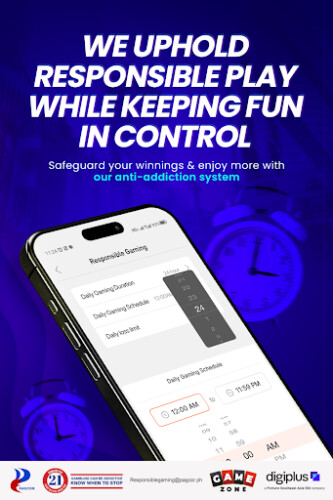
PAGCOR’s March 19, 2026 approved electronic-games list includes Tongits Plus and Tongits Quick under Gamezone. Access requirements include eligibility restrictions and an age minimum of 21 years old and above. For downloads, using the official website or verified app-store listings reduces risk compared with random third-party APK links from unverified ads or messages.
© 2026, C Wood. All rights reserved.