
Red, Black and Double Zero: How Roulette Keeps Showing Up in Hip Hop
Nas’s “Street Dreams” offers a starting point for understanding rap’s attraction to casino imagery. Hip-Hop Wired pairs the video with Casino in its survey of movie-inspired rap visuals. The connection matters beyond the clothes: casino cinema gives ambition a room to occupy, with money on display and consequences just outside the frame. A roulette wheel compresses that tension into a single moving image. Someone makes a choice, everyone watches, and the ending stays out of reach.
The distance between that screen image and roulette strategy is where the metaphor gets interesting. A rapper can write a character who controls the room; confidence does not give that character control over a random result. Reading the imagery means keeping those ideas apart. This is a look at the symbolism and the mechanics, not an invitation to play; online casino access in the United States depends on state law and state-regulated licensing.
Why rap uses gambling imagery
A wager is a compact storytelling device. It gives a verse something to lose without needing a long explanation. Put a character beside a table and the audience can immediately read either nerve or desperation. The same gesture can mean different things depending on who is telling the story.
That ambiguity suits a genre in which the voice delivering a boast can also expose its cost. A character who acts untouchable may be trying to convince himself as much as the room. Read that way, the chips are props in a performance of certainty. Their dramatic value comes from the possibility that the performance will fail.
Roulette supplies a particularly sharp version of that idea because the decision and the result happen at different moments. The wager is deliberate. The landing is not. A video editor could hold on a face during that gap and get suspense without adding another line of dialogue.
What the wheel really offers: American vs European odds
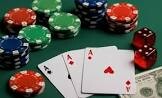
The colors make the choice look simple, but red and black are not the whole wheel. A standard European layout has 37 pockets, including a single zero. A standard American layout has 38 because it adds double zero. Both standard versions have 18 red pockets and 18 black pockets. The zero pockets stop a color bet from being a fifty-fifty proposition.
That makes roulette odds useful for understanding the image without buying into it. On a double-zero wheel, red covers 18 of 38 possible outcomes, not half. The extra pocket changes the calculation even though the table’s red-and-black design looks familiar. A confident expression on camera changes nothing about those proportions.
Roulette payout facts
The Nevada Gaming Control Board’s published Live Roulette rules of play describe a single-zero wheel and list a straight-number payout of 35 to 1, with red and black paying 1 to 1. Those are payouts, not promises about the next result. The document describes that particular game; it is not evidence that every roulette variation uses identical rules.
For a standard straight-number bet, the winning number still has only one pocket. With the stake returned separately, a 35-to-1 payout falls short of the fair payout implied by either standard wheel. That gap creates the house edge. Previous spins do not build a debt that the wheel must repay, so a run of black results does not make red due.
Luck and hustle culture
Here the music metaphor starts arguing with itself. Hustle language puts the emphasis on decisions: making another record, sharpening a verse, finding a distinctive sound. Roulette makes no allowance for effort. Treating the wheel as proof that persistence always wins confuses two very different stories.
The distinction becomes clearer away from the casino set. The profile of CeeGramz and his single “Deli” describes an artist working to establish a recognizable identity, with melodic influences informing his approach. That is a creative problem with choices inside it. A musician can revise a hook after hearing what does not work. A roulette number cannot be improved by another take.
The stronger reading of gambling imagery leaves that contradiction intact. The boast sounds bigger because it sits beside something the speaker cannot command. Remove the possibility of loss and the scene becomes a display window. Keep it present and the performance acquires a question: is this character fearless, or simply refusing to acknowledge the stakes?
A song can return to its hook and make the ending feel inevitable. The wheel cannot. That difference is what gives the casino image its bite: the artist chooses when the chorus lands, while the ball keeps its own ending.
© 2026, C Wood. All rights reserved.