
From Roc-A-Fella’s First Protégé to the Interviewer Delivering the Conversations Hip-Hop Actually Wants
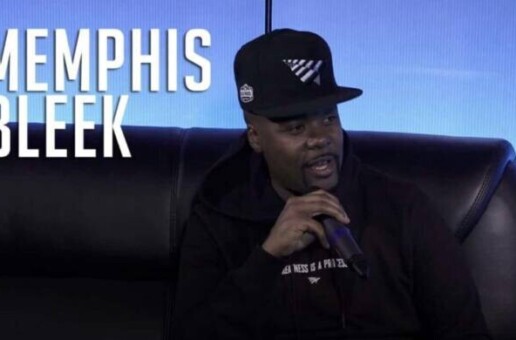
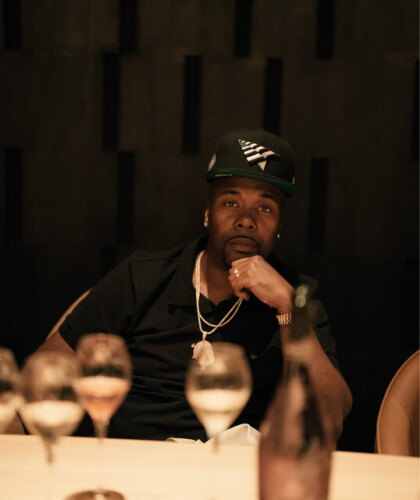
Memphis Bleek has added another title to a résumé already built on music, loyalty, survival, reinvention and cultural history: journalist.
Not the manufactured kind.
Not the kind who studies a guest’s most painful public moment and patiently waits for the right time to turn it into a headline. Not the interviewer who disguises an accusation as a question, encourages an artist to speak recklessly and then watches from a safe distance as the resulting clip travels across social media.
Memphis Bleek is becoming a different kind of journalist—one who understands that a powerful interview does not require an ambush.
Through his talk show and podcast, ROC Solid, Bleek is demonstrating that journalism can remain entertaining without becoming destructive. It can be revealing without being invasive. It can deliver information without manufacturing humiliation. Most importantly, it can center the person sitting in the guest chair rather than centering the host’s desire to go viral.
That distinction matters now more than ever.
Podcasts are everywhere. Everyone has a microphone, a camera, a neon sign, a couch and an opinion. New interview programs appear almost daily, promising “real conversations,” “uncensored truth” and “never-before-heard stories.” Yet many of these shows quickly become indistinguishable from one another. The lighting changes. The furniture changes. The hosts change. The formula, however, remains painfully familiar.
Ask about an old disagreement.
Bring up a person who is not in the room.
Search for hidden tension.
Push the guest toward a controversial statement.
Extract a thirty-second clip.
Post it without the surrounding context.
Wait for the drama.
Then act surprised when relationships are damaged.
It is a predictable cycle, and audiences are beginning to recognize it. What once appeared bold now often feels rehearsed. What was once marketed as fearless journalism can sometimes look like little more than professionally packaged provocation.
ROC Solid offers another direction.
Memphis Bleek does not need to manufacture proximity to hip-hop history because he lived it. He does not have to pretend to understand the pressures of the music business because he experienced them from inside one of the most influential rap movements ever created. He does not have to bait his guests into proving their credibility because his own credibility was established long before podcast studios became fashionable.
Bleek brings lived knowledge to the interview chair.
That changes everything.
The Conversation Is About the Guest—Not the Trap Waiting for Them
The strongest element of ROC Solid is not simply the identity of its host. It is the atmosphere Memphis Bleek creates around the conversation.
His interviews focus on what the guest is building, what the guest has survived, what the guest has learned and what the guest is doing now. That may sound like the obvious purpose of an interview, but within the current media environment, it has almost become revolutionary.
Bleek is not attempting to turn every discussion into an investigation of unresolved rumors. He is not placing hidden land mines inside his questions. He is not smiling at a guest while quietly preparing to use that person’s answer against them in the episode title.
Instead, he deals in the present facts of the person’s life and career.
What is the artist releasing?
How was the work created?
What did the journey require?
What lessons came from failure?
What business decisions changed the artist’s direction?
What does the guest understand now that they could not have understood ten years ago?
These are the questions that create a record of someone’s life. They are the questions that future artists, executives, historians and fans may revisit years later to understand how a career was actually built.
That is journalism.
It may not always generate the loudest argument on social media, but it produces something far more valuable: an honest archive.
The official description of ROC Solid presents the show as a destination for raw conversations, Roc-A-Fella stories and music-industry insight, with discussions spanning music, business, culture and the hustle behind success. That positioning fits Bleek naturally because his career sits at the intersection of all four.
There is also something refreshing about watching a host who does not appear desperate to dominate his own interview. Bleek understands when to speak, but he also understands when to listen. He can contribute history without interrupting the guest’s history. He can challenge a statement without turning the conversation into combat.
His style carries authority without constantly announcing that authority.
That is what makes ROC Solid compelling. The show does not feel as though it is trying to prove it belongs in hip-hop. It knows it belongs there.
The Podcast Boom Has Created Quantity—But Not Always Quality
The expansion of podcasting has been important. It has allowed artists, entrepreneurs and communities to tell stories without waiting for traditional television networks, radio programmers or magazine editors to approve them. Independent media has made space for voices that mainstream platforms previously overlooked.
But every media revolution eventually develops clichés.
Hip-hop podcasting has reached that stage.
Too many programs depend on the same recycled subjects. The guest may arrive to promote an album, book, clothing line, tour or business venture, but the interview becomes consumed by a disagreement from fifteen years earlier. The artist’s current work receives five minutes. An old rivalry receives forty-five.
A guest may explain personal growth, yet the interviewer keeps pulling the conversation backward, hoping to awaken the least evolved version of that person.
That is not always truth-seeking. Sometimes it is simply conflict-seeking.
There is a difference.
Conflict can create engagement, but engagement alone does not create meaningful journalism. A million views cannot automatically make a question intelligent. A viral clip cannot guarantee that an interview contributed anything valuable to the culture.
Memphis Bleek appears to understand this distinction.
He is not operating from the belief that the only interesting version of a rapper is an angry rapper. He recognizes artists as fathers, mothers, executives, survivors, strategists, investors, producers, community members and evolving human beings.
He allows them to speak from who they have become—not merely from who the public remembers.
This is where ROC Solid quietly applies pressure to the rest of the interview space.
The show does not have to directly criticize every drama-driven podcast. Its quality makes the criticism for it.
When a thoughtful conversation can hold attention without betrayal, it exposes the emptiness of programs that rely entirely on confrontation. When a respected artist can speak openly without being manipulated, it proves that trick questions were never the only route to honesty.
Some interviewers create tension because they lack history.
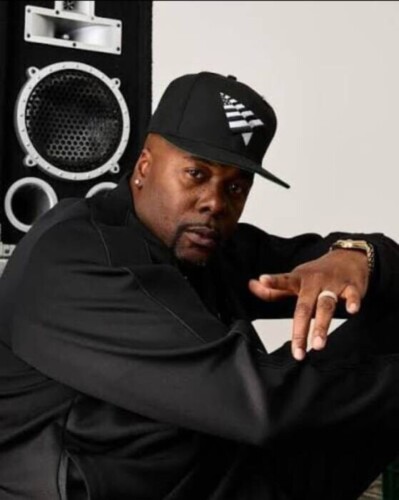
Memphis Bleek brings history into the room with him.
Before ROC Solid, There Was Roc-A-Fella
To understand why Memphis Bleek is so effective in this role, one must understand the depth of his relationship with Jay-Z and the foundation from which his career emerged.
One factual distinction is important: Bleek came up through Roc-A-Fella Records, not Roc Nation. Roc-A-Fella was the independent company established in the 1990s by Jay-Z, Damon Dash and Kareem “Biggs” Burke after major labels declined to give Jay-Z the type of opportunity and control he wanted. Roc Nation was founded later, in 2008.
Bleek was not simply another artist added after the Roc-A-Fella movement had already become successful. He was present near the beginning.
Malik Cox, professionally known as Memphis Bleek, grew up in Brooklyn’s Marcy Houses—the same housing development closely connected to Jay-Z’s origin story. Their bond preceded fame, corporate partnerships, stadium concerts and luxury brands. Bleek knew Shawn Carter before the world fully understood Jay-Z.
As Bleek has explained in interviews, he was rapping as a teenager and received his opportunity from Jay at approximately sixteen years old. He would become one of Roc-A-Fella’s earliest signings and is widely described as the first artist Jay-Z signed.
That fact carries more weight than a simple entry on a music résumé.
Being the first artist signed by an emerging Jay-Z meant becoming part of an experiment that had no guaranteed ending. At that point, Roc-A-Fella was not the untouchable dynasty people celebrate today. It was an ambitious independent company fighting to establish itself in an industry that had already rejected its central artist.
Bleek’s career began while the building was still being constructed.
His first major introduction came through “Coming of Age” on Jay-Z’s 1996 debut album, Reasonable Doubt. The record created a cinematic exchange between the established hustler and the younger figure entering the game. It was storytelling, mentorship and character development presented through rap.
Bleek was young enough to embody the song’s title literally. He was coming of age artistically, professionally and personally while being introduced to an audience through an album that would eventually be recognized as one of hip-hop’s defining works.
His presence continued across several stages of Jay-Z’s rise, including appearances connected to Vol. 2… Hard Knock Life, Vol. 3… Life and Times of S. Carter, The Dynasty: Roc La Familia and The Blueprint 2.
Bleek’s own debut album, Coming of Age, arrived in 1999. It entered the Billboard 200 at No. 7 with approximately 118,000 units sold during its first week. He followed it with The Understanding, M.A.D.E. and 534, building a catalog that captured different eras of Roc-A-Fella’s evolution.
But statistics alone cannot fully explain his significance.
Memphis Bleek was present in rooms that later became chapters in hip-hop history. He saw the decisions behind the records. He witnessed the personalities behind the public images. He experienced the momentum, expectations, internal pressure and changing business structure surrounding one of rap’s most discussed companies.
Therefore, when he interviews a producer, rapper, executive or cultural figure, his questions do not come exclusively from online research. They come from experience.
Bleek knows what it means to be a young artist beside a global superstar.
He knows what loyalty demands.
He knows what happens when the public creates expectations for a person before that person has fully developed.
He knows the difference between being celebrated as part of a team and being evaluated as a solo artist.
He knows how quickly an industry can change.
He also knows that every famous story contains details the public never saw.
That knowledge gives ROC Solid a level of depth that cannot be purchased with an expensive studio.
Memphis Bleek and Jay-Z: A Relationship Larger Than the Industry’s Favorite Narratives
The entertainment industry often struggles to understand long-term relationships unless conflict is attached to them.
Loyalty is treated as suspicious. Privacy is mistaken for distance. A friendship that is not constantly displayed online is assumed to be broken. If two people are not publicly praising each other every week, commentators begin searching for evidence of resentment.
The relationship between Memphis Bleek and Jay-Z has been subjected to this type of speculation for years. Yet their story has endured through changing labels, shifting eras and the pressure created whenever one person reaches a level of global success that few artists ever experience.
Jay-Z has publicly referred to Bleek in familial terms, describing him as his little brother. In a 2026 GQ interview, Jay used Bleek as an example while discussing mentorship and artistic direction, indicating the closeness and directness of their relationship.
That bond cannot be reduced to a contract.
Bleek’s journey also represents a lesson in proximity. Being close to greatness does not eliminate the need for individual growth. In some cases, it increases the pressure. Every move is compared. Every album is judged against an empire. Every achievement can be minimized because observers assume access made the journey easy.
But access is not the same as endurance.
Many people receive an introduction. Far fewer remain relevant to the story thirty years later.
Memphis Bleek has endured because he was more than a temporary attachment to Jay-Z’s ascent. He became part of the architecture of the Roc-A-Fella era. His voice, ad-libs, records, appearances and stage presence helped define the feeling surrounding that movement.
Now, with ROC Solid, he is preserving that history while expanding beyond it.
He is not trapped inside nostalgia. He uses history as a credential, not a cage.
A Stadium-Sized Reminder of Bleek’s Place in the Story
The summer of 2026 brought a powerful reminder of how deeply Memphis Bleek remains connected to Jay-Z’s musical legacy.
Jay-Z returned to New York for a major anniversary concert series at Yankee Stadium from July 10 through July 12, celebrating thirty years since Reasonable Doubt and twenty-five years since The Blueprint. The concerts became enormous cultural events, featuring family members, legendary collaborators and artists from multiple chapters of his career.
Bleek’s involvement carried special meaning because the celebration began with an album on which his younger voice had been permanently documented.
This was not simply a former label artist appearing beside an old executive.
It was a full-circle moment.
The teenager introduced through “Coming of Age” had become a veteran standing inside a stadium-sized celebration of the same history he helped create. The environment demonstrated that Bleek’s role was not erased by time. It was confirmed by it.
The performances also reminded audiences of his effectiveness onstage. Bleek has always understood how to complement Jay-Z’s presence without disappearing inside it. That requires timing, confidence and an instinctive awareness of the music.
The Yankee Stadium series was sometimes casually described as part of a “tour,” but it was more precisely a three-night New York anniversary residency, with additional major Jay-Z appearances surrounding the broader 2026 return to live performance. The residency became one of the summer’s most discussed hip-hop events and reinforced the lasting power of the Roc-A-Fella catalog.
For Bleek, the timing could not have been better.
While celebrating the history, he was also preparing new music and developing ROC Solid.
The past was visible, but the present was moving.
ROC Solid Is Not Nostalgia Wearing a New Outfit
A weaker show might have relied entirely on old Roc-A-Fella stories. The interest certainly exists. Fans remain fascinated by the label’s formation, its artists, its business conflicts, its recording sessions and the eventual changes that reshaped the company.
Bleek could easily build an audience by retelling the same dramatic moments repeatedly.
But ROC Solid has the potential to become much bigger than a memory bank.
The show’s strongest episodes connect history to current realities. Conversations about earlier eras become lessons about ownership, discipline, production, artist development, loyalty, publishing, management and personal evolution.
Bleek has welcomed artists and industry figures into discussions designed to examine the work behind their public identities. An episode featuring Albee Al, for example, was presented as a conversation about pain, perseverance, legal struggles, loyalty, rebuilding and survival within the music industry. A live edition from the Roots Picnic further demonstrated that the format can travel beyond a traditional studio and operate inside major cultural events.
These are not conversations built solely to expose.
They are built to explain.
That word—explain—is crucial.
Hip-hop journalism has spent years exposing who argued, who left a label, who refused a feature and who felt disrespected. But the culture also needs interviews explaining how careers survive, how people rebuild after setbacks, how artists transform experience into business and how veterans adapt without chasing every trend.
Bleek is positioned to conduct those interviews because adaptation is part of his own story.
D’USSÉ: A Partnership That Matches the Atmosphere
The D’USSÉ sponsorship surrounding ROC Solid adds another layer to the program’s presentation.
Alcohol sponsorships in entertainment can easily become excessive. A bottle is sometimes treated as permission for disorder. Guests are encouraged to drink beyond moderation, lower their defenses and make statements they may later regret. The resulting chaos is then promoted as authenticity.
That is not the energy ROC Solid needs, and it is not the energy Memphis Bleek appears interested in presenting.
D’USSÉ functions differently within this setting.
A sip may accompany the conversation, but the show is not built around drunkenness. The bottle is part of the environment—not the personality of the program. The conversation remains in control.
D’USSÉ’s own story positions it as a modern expression of cognac founded by Jay-Z, connecting traditional French cognac craftsmanship with a contemporary luxury identity. Its VSOP expression is aged for at least four and a half years and incorporates eaux-de-vie matured in the cellars of the Château de Cognac, producing a bold but balanced profile.
Those details matter because cognac is based on time, aging, patience and refinement.
The symbolism aligns naturally with Memphis Bleek.
Bleek is not a personality created overnight for the digital era. He has been aged by experience. He has survived changing sounds, changing technology, changing business models and changing public expectations. Like the spirit placed in the bottle, his value comes partly from what time has developed.
Within the world surrounding ROC Solid, D’USSÉ represents more than a drink. It suggests lifestyle, achievement, composure and arrival. It speaks to the hustle required to reach a room where the conversation is no longer about whether success is possible, but about what should be done with success once it arrives.
The bottle communicates status, but not merely the loud performance of status.
There is a difference between possessing something expensive and understanding what it represents.
D’USSÉ can symbolize the person holding the bottle: someone who has worked, matured, survived and earned the right to appreciate the moment. It reflects wealth not only as money, but as experience, relationships, knowledge and control over one’s direction.
That is why moderation is essential to the presentation.
A classy sip supports the setting. Excess would undermine it.
ROC Solid is not valuable because its guests might become intoxicated enough to reveal something damaging. It is valuable because they are comfortable enough to reveal something meaningful.
The distinction is everything.
One approach waits for the guest to lose control.
The other creates enough trust for the guest to speak with control.
Memphis Bleek chooses the second.
Fanatics Fest and the Return of the 40/40 Energy
Bleek’s recent presence during the New York Fanatics Fest period placed him inside another environment deeply connected to Jay-Z’s evolving business legacy.
For the 2026 Fanatics Fest at New York’s Javits Center, Jay-Z’s famous 40/40 Club was revived as a temporary experience for a third consecutive year. The sports-inspired club, originally opened in Manhattan in 2003, had long represented the intersection of athletics, music, luxury, nightlife and business. The 2026 Fanatics Fest ran from July 16 through July 19, shortly after Jay-Z’s Yankee Stadium residency.
The timing created an extraordinary stretch for New York culture.
First, Yankee Stadium became a monument to Jay-Z’s music.
Then, the 40/40 Club atmosphere returned within Fanatics Fest as a monument to the larger empire surrounding that music.
Bleek’s presence in this environment was fitting. He represents the original musical foundation while simultaneously building a new media platform. He can stand inside a room celebrating Roc history without appearing as a relic from it.
That is what reinvention looks like when it is done correctly.
It does not require rejecting the past.
It requires using the past as capital for the next venture.
Fanatics Fest itself has grown into a massive meeting point for sports fans, athletes, entertainers, collectors and business leaders. Reports surrounding the 2026 edition noted that the prior year drew more than 125,000 attendees and hundreds of athletes and celebrities.
For ROC Solid, access to spaces of that magnitude creates tremendous possibilities.
Imagine the conversations Bleek can capture when music, sports, ownership, branding and culture are all gathered under one roof. An athlete can discuss discipline. A recording artist can discuss longevity. An executive can discuss risk. A veteran can explain how the business changed. A younger star can describe where it may be going.
Bleek can connect these worlds because he is fluent in more than one kind of hustle.
“No More” and the Sound of a New Chapter
While ROC Solid expands Memphis Bleek’s identity as a host and journalist, he is not abandoning the talent that introduced him to the world.
Music remains central.
Bleek is preparing a new album, and the emerging single “No More” has already generated interest through teaser videos, previews and strategically released glimpses of the record. The track has been connected to production by Cool & Dre, giving the release another layer of anticipation.
The timing feels intentional.
After standing beside Jay-Z during a historic celebration of Reasonable Doubt, Bleek is redirecting attention toward his own next chapter. The message is clear: honoring history does not mean living exclusively inside it.
“No More” feels like an appropriate title for this stage of his career.
The teaser strategy has also allowed anticipation to grow without revealing everything at once. In an era when artists often flood audiences with endless content, restraint can be powerful. A carefully selected preview creates curiosity. It allows listeners to wonder about the direction of the album, the tone of Bleek’s writing and the perspective he now brings to the microphone.
That perspective is likely to be the project’s greatest advantage.
A teenage Memphis Bleek could rap about ambition from the beginning of the road.
The current Memphis Bleek can speak about ambition after witnessing what happens when the road leads to money, pressure, loyalty, disappointment, survival, family, entrepreneurship and legacy.
The voice may be familiar.
The weight behind it is different.
Why Memphis Bleek’s Journalism Matters
Calling Memphis Bleek a journalist may surprise people who still associate journalism exclusively with newspapers, network anchors and press credentials.
But journalism has always been broader than a job title.
At its core, journalism involves gathering information, asking purposeful questions, documenting experiences, providing context and presenting stories to the public.
Bleek is doing that work through conversation.
Furthermore, he brings a form of cultural literacy that traditional reporters cannot always reproduce. A guest may speak in shorthand because Bleek understands the era, the neighborhood, the label politics, the studio culture and the unwritten rules being referenced.
He can hear what is being said—and what is being carefully left unsaid.
The important difference is that he does not appear determined to punish the guest for that caution.
Some interviewers believe a guest owes the public every private detail. Bleek’s approach suggests something more mature: a person can be honest without surrendering every boundary.
That understanding creates better interviews.
People speak differently when they do not feel hunted. They provide greater context. They reflect instead of reacting. They explain rather than defend.
A hostile question may generate a louder answer.
A trusted question often generates a deeper one.
ROC Solid is built for depth.
The Quiet Warning to Every Copy-and-Paste Podcast
There is a passive but unmistakable challenge contained within Memphis Bleek’s rise as an interviewer.
The message to the podcast world is simple:
Having microphones does not automatically make a conversation important.
Having a celebrity guest does not automatically make an episode historic.
Getting someone angry does not automatically make a host courageous.
And creating a viral problem for a guest does not automatically make the interviewer a journalist.
Some platforms have confused access with responsibility. They receive the opportunity to interview an artist, then use that access to create the very controversy the artist will later have to manage.
ROC Solid reminds audiences that an interview can benefit everyone involved.
The guest can be respected.
The audience can be informed.
The host can remain entertaining.
The sponsor can be presented with class.
The culture can receive a permanent piece of history.
No one has to be sacrificed for the episode to succeed.
That may sound obvious, yet the current media landscape has made it feel innovative.
A Show You Need to Tap Into
ROC Solid works because Bleek does not approach journalism as an outsider searching for entry into hip-hop. He approaches it as someone who helped create part of the history everyone else is still discussing.
He has the stories.
He has the relationships.
He has the credibility.
He has the instincts.
Now, he has the platform.
The show’s partnership with D’USSÉ enhances an atmosphere of maturity, luxury and measured celebration. The new music keeps Bleek connected to his foundation as an artist. His appearances surrounding Jay-Z’s 2026 stadium return and the New York Fanatics Fest moment place him directly inside the culture’s current conversation—not outside it reminiscing.
Most importantly, Bleek is building a show where guests can discuss their work without wondering which sentence will be separated from its meaning and transformed into tomorrow’s controversy.
That is rare.
And rare things deserve attention.
There are countless podcasts available to watch. Many will offer noise. Some will offer arguments. Others will offer familiar questions wearing new clothes.
ROC Solid offers substance.
It is polished without becoming artificial. Honest without becoming reckless. Relaxed without becoming careless. Historical without being trapped in history.
Memphis Bleek understands that the most powerful interview is not always the one that leaves the internet shocked for twenty-four hours. Sometimes it is the conversation that leaves the audience informed for years.
So tap in.
Watch the conversations.
Listen to the details.
Pay attention to the questions that are not designed as traps.
Take note of how much more a guest reveals when respect remains present in the room.
Memphis Bleek has spent decades being part of the story.
With ROC Solid, he is now helping document it.
And while the crowded podcast industry continues chasing temporary moments, Bleek is building something designed to last.
Not messy.
Not manufactured.
Not dependent on hidden drama.
Just experienced, informative, composed and—exactly as the title promises—ROC Solid.
For more inquiries about “ROC Solid”, contact The Misty TV Firm Corporation via email: [email protected]
ROC Solid Interview with Lenny S video link: https://youtu.be/M3o0v3asuLg
The Misty TV Firm Corporation Instagram IG: @themistytv
ROC Solid Podcast Instagram IG: @rocsolidpod
© 2026, Logan. All rights reserved.