

Some artists tell stories. Others become one.
For Kazon, every record begins long before the beat drops. It begins in Southeast Washington, DC, in the historic Linda Pollin neighborhood—a community that no longer exists physically but continues to live through the memories of the people who called it home. Before its demolition in 1997, Linda Pollin represented a unique piece of Southeast culture, producing generations of resilient families who understood both the beauty and the burdens that came with growing up in the nation’s capital.
That environment shaped Kazon long before music ever did.
Like many young people raised in Southeast, he witnessed both sides of his community. There was the family, the loyalty, the neighborhood pride, and the sense of belonging that outsiders rarely understand. But there were also realities that forced kids to grow up fast. Those experiences became part of his foundation, giving him a perspective that couldn’t be manufactured inside a recording studio.
Years later, those same experiences would become the heartbeat of his music.
What separates Kazon from many artists isn’t simply that he’s lived through hardship—it’s what he chose to do after surviving it.
Life presented him with obstacles that would have been enough to derail almost anyone. In the early 2000s, Kazon was wrongfully arrested for a crime he did not commit. Overnight, his life was placed in the hands of a justice system where innocence doesn’t always guarantee immediate freedom.
For many people, an experience like that leaves permanent scars. It creates distrust, bitterness, and anger that can linger for decades. Instead, it became the moment that redirected his life.
While incarcerated, Kazon found Yahuwah. What started as a search for answers gradually became something much deeper—a complete spiritual awakening. Removed from the distractions of everyday life, he began reevaluating not only who he was, but who he wanted to become once he regained his freedom. Music suddenly carried a different responsibility. It could no longer exist solely as entertainment. It had to mean something.
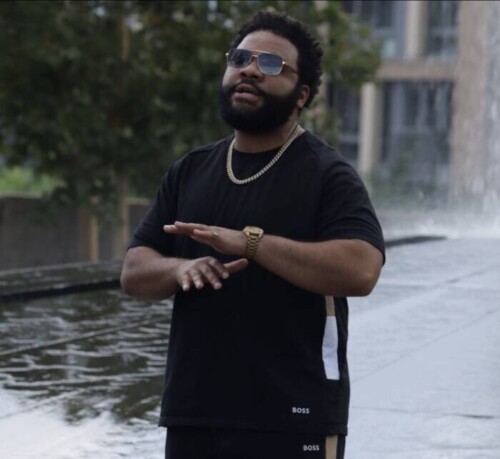
When he was ultimately found not guilty of every charge against him, Kazon didn’t leave incarceration with revenge on his mind. He left with purpose. Rather than returning to the same mindset that had once surrounded him, he committed himself to creating music rooted in truth, accountability, and perseverance.
His records stopped glorifying cycles he knew all too well. Instead, they started documenting what it actually takes to escape them. That shift wasn’t driven by trends or marketability. It came from lived experience.
Then life tested him again.
At a point when many people would have felt they’d already endured enough, Kazon survived being shot five times at close range.
Five gunshot wounds. Another encounter with mortality. Another reminder that tomorrow isn’t promised.
Surviving an incident like that changes the way most people see the world. It strips away distractions and forces clarity. For Kazon, it reinforced what he had already begun to believe—that every day he was given was another opportunity to fulfill a purpose much larger than himself.
You can hear that conviction throughout his music. There’s still grit in his delivery. There’s still the unmistakable energy that has long defined the DMV’s musical identity. But underneath the hard drums and confident flows sits something more reflective.
His lyrics aren’t trying to convince listeners that he’s invincible.
They’re proof that vulnerability and strength can coexist. That survival doesn’t always look loud. And that growth often makes for the most compelling storytelling.
In a music industry increasingly driven by algorithms, short attention spans, and carefully curated personas, Kazon represents something refreshingly difficult to fake: perspective.
His catalog doesn’t ignore where he comes from. It honors it.
But it also refuses to romanticize the pain that often accompanies those environments. Instead, his music asks a different question: What happens after survival?
What happens when someone decides they’re no longer interested in simply making it out—but in reaching back through their art to help someone else find a way forward?
That question sits at the center of his latest release, “Looking For Me.”
The record isn’t just another single. It’s a reflection.
Built around melodic production and thoughtful lyricism, the song captures an artist taking inventory of everything life has thrown at him while searching for clarity, identity, and peace. Rather than chasing trends, Kazon leans into honesty, allowing listeners to connect with a version of hip-hop that’s increasingly becoming rare—music that prioritizes substance without sacrificing authenticity.
There’s no need to exaggerate his story. Reality has already done enough. Wrongful incarceration. Spiritual rebirth. Surviving five gunshots.
Finding purpose where others might have found defeat.
Each chapter has added another layer to the artist listeners hear today.
As the DMV continues producing influential voices across hip-hop, Kazon represents a different lane—one where authenticity outweighs perception and testimony carries more weight than image. He’s not interested in rewriting history or pretending the difficult moments never happened. Instead, he allows every setback to become another piece of a larger narrative centered on resilience, faith, and redemption.
For Kazon, music has become more than self-expression. It’s documentation. It’s healing. It’s accountability.
And perhaps most importantly, it’s proof that some of the most meaningful art comes from people who refused to let their worst days become the end of their story.
Sometimes the strongest voices in hip-hop aren’t the loudest. They’re the ones that survived long enough to finally be heard.
© 2026, deblazeo. All rights reserved.