

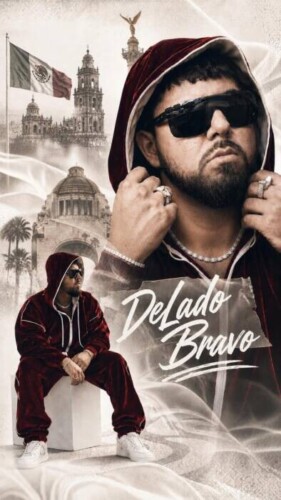
For DeLado Bravo, geography has always been more than a detail in his biography. The places he has called home—from East Los Angeles and South Central to Ogden, Utah—have each contributed something important to his identity. Together, they have shaped an artist whose music moves freely between Mexican tradition, American hip-hop and the complicated reality of growing up between cultures.
Los Angeles connected Bravo to his Mexican roots. The city’s music, family traditions and cultural energy surrounded him from an early age, while South Central introduced him to the resilience and creativity found within street culture and hip-hop. Relocating to Northern Utah placed him in a completely different environment, but that contrast ultimately expanded his perspective.
“Coming from Southern California and residing in Northern Utah really shaped who I am, not just as an artist, but as a person,” Bravo explains.
That journey can be heard throughout his catalog. His music brings together Corridos Tumbados, Spanish Trap, rap, reggaeton, cumbia, R&B and even country influences. On paper, that combination might appear unusually broad, but for Bravo, it reflects the music he has naturally absorbed throughout his life.
Rather than selecting a genre before he begins creating, he allows the emotion behind a song to determine its direction. A personal or reflective story might belong over the guitars and measured storytelling of a corrido. A record built around movement and confidence may require the energy of reggaeton or trap. The style can change, but the emotional foundation remains consistent.
“I don’t force myself into one genre,” he says. “I let the song tell me where it wants to go.”
That creative freedom places Bravo within a generation of Latino artists who are refusing to treat musical traditions as fixed categories. Artists such as Natanael Cano, Junior H, Peso Pluma and Fuerza Regida have demonstrated how regional Mexican music can evolve without losing its cultural identity. They have introduced new production, fashion, language and attitude to the genre while showing that authenticity does not require following every established rule.
Bravo draws inspiration from that independence, but he is not interested in simply recreating another artist’s formula. The most important lesson he has taken from their success is the value of developing a recognizable identity.
As a first-generation Mexican American, he understands the cultural tension that can come with growing up in the United States while remaining connected to family history and tradition. The sacrifices, expectations and everyday experiences shared by many first-generation families naturally find their way into his work.
Bravo began making music at 13, although it initially existed as a personal passion rather than a carefully planned career. It was not until his late 20s that he made the decision to commit himself fully to the craft. The shift came from understanding that talent and ambition would mean little without consistent effort.
“I didn’t want to look back one day and wonder what could’ve happened if I gave it my full effort,” he says.
From that point forward, he began investing more seriously in his music, artistic development and personal growth. That commitment has already produced tangible results, including headlining performances and selling more than 120 tickets independently.
For an emerging artist outside a major entertainment center, those numbers represent more than attendance. They show that Bravo is establishing a genuine audience in a place that does not offer the same industry infrastructure as Los Angeles, New York or Miami.
Utah has presented its share of challenges. There are fewer established pathways, industry relationships and performance opportunities available to artists attempting to build careers locally. Bravo has consequently had to create his own momentum, develop connections and remain visible without relying on a large music scene to carry him.
Yet being based in Utah has also become part of what separates him from other performers. It has made him more resourceful and strengthened his appreciation for every step forward.
“Living in Utah makes my story a little different, and that’s something I’m proud of,” he says. “If anything, it motivates me even more to show people that talent can come from anywhere.”
There was no single night when Bravo suddenly realized that listeners were connecting with his music. Instead, the evidence accumulated gradually. People continued attending his performances, purchasing tickets, sharing his releases and sending messages about songs they had placed on repeat. That consistency showed him that the music was reaching beyond his immediate circle.
For Bravo, that connection matters because his songs are rooted in recognizable human experiences. Whether writing about heartbreak, ambition, struggle or the pressures of everyday life, he wants listeners to hear emotions they may have had difficulty expressing themselves.
“More than anything, I want people to feel understood,” he explains. “Sometimes people know what they’re feeling, but they don’t know how to express it.”
That mission also explains why no single release can completely define DeLado Bravo. Each song captures a different part of his personality or a particular stage of his development. One record may focus on where he comes from, while another reflects what he has endured or where he intends to go. His full identity becomes clearer across the variety of his catalog rather than through one representative track.
The same principle applies to the relationship between his Mexican roots and his wider musical influences. Bravo does not view cultural authenticity and experimentation as opposing forces. Regional Mexican music, hip-hop, R&B, rap and country were all part of the environment that shaped him. Blending them is not a marketing strategy—it is an honest representation of how he hears music.
Looking ahead, Bravo wants to bring that sound to larger stages and introduce it to a wider audience. His current work extends beyond recording new songs to include music videos and visual content designed to strengthen the entire project. Consistency remains his immediate priority, with plans to keep releasing music across multiple genres while improving the quality of every component surrounding it.
His long-term vision is not based on one viral record or temporary wave of attention. He wants to construct a career capable of lasting, supported by a catalog that shows his range without sacrificing his identity.
DeLado Bravo’s story belongs equally to Southern California and Northern Utah, to Mexican musical tradition and American cultural exchange. Instead of choosing between those worlds, he is bringing them together—and turning the distance between them into the foundation of his sound.
© 2026, Variety Press. All rights reserved.