


For 4Sho Faze, music has never existed separately from real life. The Rochester-born artist has spent years turning his experiences, environment and evolution into records, building a catalog that now includes more than 2,000 music files and a story that stretches far beyond the studio.
During a recent appearance on Vigilantes Radio Live via iHeart Radio, 4Sho Faze opened up about the experiences that shaped him, the sacrifices behind pursuing music, his approach to protecting his name and why his journey is ultimately about more than becoming another rapper.
His story begins in Rochester, New York, where Faze was exposed early to an environment that included street activity and violence. His mother eventually relocated the family to North Carolina in an effort to give her son a different environment and future.
The move changed his surroundings, but the experiences remained part of him.
Those memories would eventually become material.
Turning Life Into Music
4Sho Faze has been recording since he was 14, and his creative output reflects an artist who rarely stops documenting his life.
During his conversation with Vigilantes Radio Live, Faze revealed that he has accumulated more than 2,000 music files over the years. At one point, creating a new song was simply part of his daily routine.
That extensive vault also gives him something many developing artists struggle to build: options.
Rather than creating music solely around what is trending at the moment, Faze pulls from his own experiences and chooses records that reflect where he is personally.
The result is a catalog that functions almost like an autobiography recorded in real time.
For Faze, the music represents pieces of a much larger puzzle. Listeners may hear individual situations, emotions and experiences without immediately understanding exactly where each one belongs in his life.
He knows the complete story.
The music reveals it piece by piece.
Learning to Become His Own Man
Family also played a significant role in shaping Faze’s perspective.
While discussing his childhood, the artist spoke candidly about his relationship with his father, who remained in New York after the family relocated.
The absence ultimately forced Faze to develop a stronger sense of independence and learn how to navigate life on his own.
That independence would follow him into adulthood and eventually into his approach to music.
His experiences across Rochester, North Carolina and later Florida exposed him to different environments and personalities. Constant adaptation taught him lessons that extended beyond survival.
One of those lessons was understanding that every situation does not require a reaction.
That perspective is particularly interesting when placed alongside music that can sometimes depict violence and confrontation.
Faze does not deny the environments or experiences that influenced him. Instead, he appears increasingly interested in showing what can be learned from them.
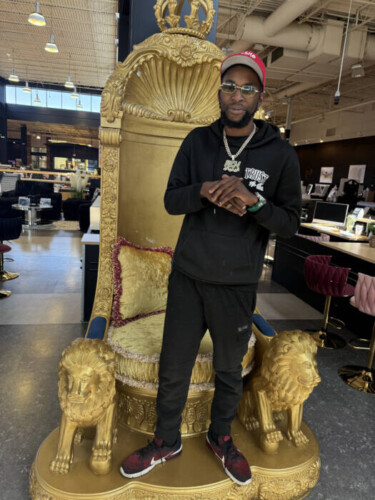
Protecting More Than the Music
Another important part of Faze’s evolution is understanding that building an artist career means protecting more than songs.
It means protecting the person behind them.
During the interview, Faze discussed the importance of his public image and how quickly one bad decision can become attached to an artist’s name.
In today’s music landscape, cameras are everywhere. Livestreams are recorded. Social media posts live beyond the moment they were created.
Faze understands that reality.
For an artist trying to build something long-term, protecting his reputation has become part of protecting the career itself.
That awareness represents another side of the artist behind records like “On Dat.”
The music may carry aggression and urgency, but the person creating it is increasingly thinking about discipline, consequences and longevity.
“On Dat” and How I’m Comin’
Faze’s current music reflects the same energy that has carried him through different stages of his life.
His single “On Dat” serves as another introduction to that mindset, while his project How I’m Comin’ represents a broader picture of who he has become.
The title carries confidence, but behind that confidence is experience.
Faze has lived through different environments, relationships, challenges and stages of personal growth. Those experiences have helped shape the artist listeners are hearing today.
Rather than separating his past from his present, he uses both.
That is what gives the music context.
Building Beyond the Booth
Faze is also beginning to think beyond recording.
He discussed exploring clothing and merchandise, including conversations surrounding manufacturing and production. The move points toward an artist who understands that music can become the foundation for something larger.
That entrepreneurial thinking is especially significant because Faze is still experiencing the reality faced by countless independent artists.
He works.
He creates.
He handles relationships.
He makes sacrifices.
And then he gets back to the music.
There is no overnight-success narrative here.
There is work.
The Sacrifice Behind the Dream
Perhaps one of the most relatable parts of Faze’s conversation came when he discussed what pursuing his goals has required personally.
Time is one of the biggest sacrifices.
Time away from family.
Time away from his relationship.
Time spent alone working, creating or simply resetting mentally when life becomes overwhelming.
It is a reality that rarely appears in the finished music video.
Building a career while maintaining everyday responsibilities requires choices, and Faze is still navigating those choices in real time.
That is part of what makes his story relatable to anyone pursuing something larger while still dealing with the responsibilities directly in front of them.
His message to people facing that same tension is straightforward:
Keep going.
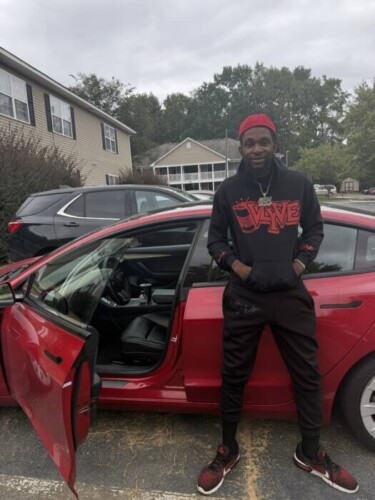
Defining Success on His Own Terms
When asked to define success beyond money, Faze’s answer revealed where his priorities ultimately lie.
He wants people to listen.
He wants listeners to buy into the music, anticipate what comes next and share what they hear with other people.
He wants recognition, but more importantly, he wants connection.
That distinction matters.
For an independent artist, developing an audience that genuinely cares about the next release can mean more than temporary attention.
And Faze is still building toward that relationship.
Long-term, his vision extends even further.
He hopes to eventually help other artists develop their own abilities, potentially creating a platform or school that allows him to pass along what he has learned throughout his journey.
For someone with thousands of recordings already behind him, that future ambition says something about where he sees his story going.
4Sho Faze is not presenting himself as a finished product.
He is still working.
Still recording.
Still building.
Still figuring out how to balance ambition with everything required to sustain it.
And perhaps that is exactly what makes this chapter worth watching.
Because long before the industry sees the finished result, there is always a period when an artist has to believe in what he is building before everybody else does.
For 4Sho Faze, that work is already underway.
Management / Label Contact
NappyCity Records
www.nappycityrecords.com
[email protected]
PR Contact
Juel @ JOR PR
[email protected]
@juelsofrome
© 2026, Logan. All rights reserved.